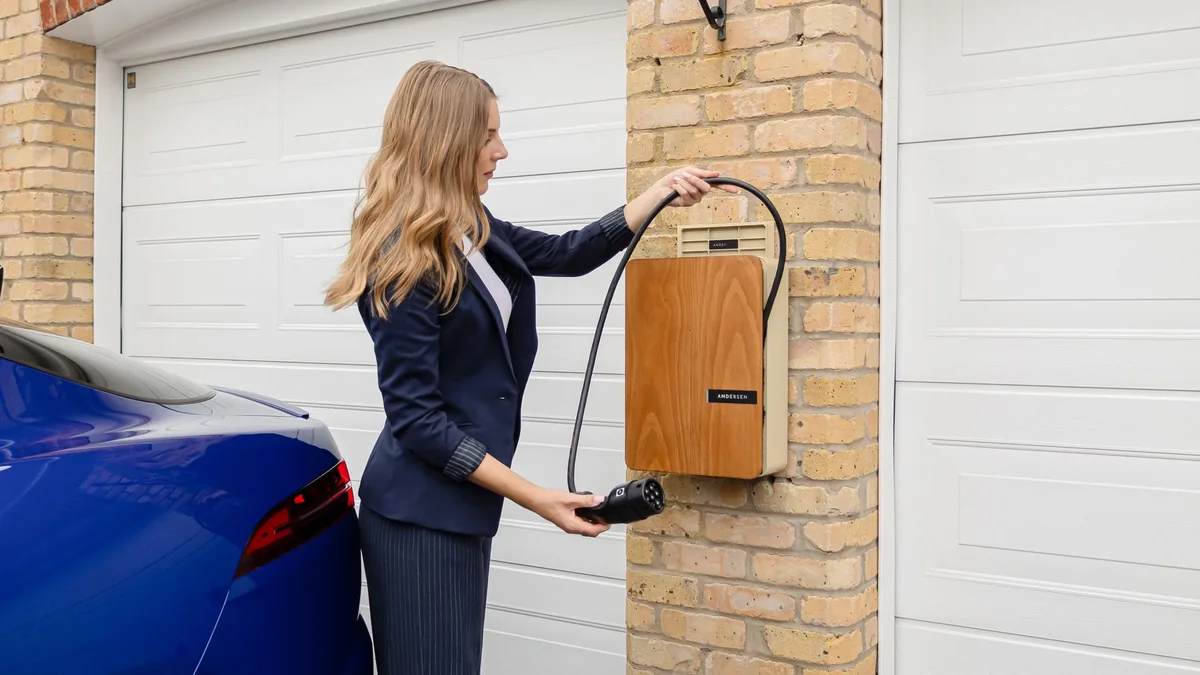
EV Charger Installation in Durham, NC
EV charger installation from Durham Solar means a full battery every morning without stopping at a public station. We install Level 2 home chargers in garages and driveways across Durham, Chapel Hill, Research Triangle Park, and Cary, with the breaker, wiring, and permit handled properly.
- Level 2 chargers on a dedicated circuit
- Electrical permits through the Durham City-County Building & Safety Department
- With or without solar
Get a Free Solar Quote
Tell us what you need — we’ll get back to you fast.
We'll be in touch shortly.
Please call us at (919) 328-3993.
Level 1 Versus Level 2
Most electric cars come with a cord for an ordinary household outlet. It works, but slowly, and a long weekend drive can leave the car short by Monday. A Level 2 charger uses a 240-volt circuit, like a dryer or range, and refills most cars overnight.
A Level 2 charger needs its own breaker, wire sized to the load, and a mounting spot within easy reach of where you park. You can choose a hardwired wall unit or a plug-in unit on a properly installed 240-volt outlet; we help you pick based on your car and garage.
Two electric cars? Two chargers can share one circuit with load management so they do not overload your service.
What Installation Covers
Panel check
Main panel capacity reviewed before anything is ordered.
Dedicated circuit
New breaker and correctly sized wire.
Mounting
Charger placed so the cable reaches without a trip hazard.
Permit
Electrical permit filed and inspected.
The Process
Quote to First Charge
Site Check
Panel capacity, distance to parking, charger choice.
Quote
Written price covering circuit, mounting, and permit.
Permit
Electrical permit with the Durham City-County Building & Safety Department.
Install and Test
Circuit run, charger mounted, inspected, and tested with your car.
Permits and Panel Capacity
A home charger adds a 240-volt circuit, and in North Carolina an electrical permit is required whenever wiring or equipment changes. Every charger we install is permitted through the Durham City-County Building & Safety Department at 101 City Hall Plaza and inspected before you plug in, the same standard we follow on solar, where solar PV installations of any value require a North Carolina electrical contractor licence.
Your electrical panel is the biggest cost variable. Many newer homes in Southpoint or Croasdaile have room for a new breaker. Older homes in Old West Durham or Duke Park may have smaller services that are already close to full and need an upgrade or load-management device first. We check before quoting so the price holds.
Distance matters too: a charger next to the panel is a short run; one at the far end of a driveway needs heavier wire and sometimes a trench.
Charging on Sunshine
An EV is one of the biggest loads in a home, which pairs naturally with solar. Under current rules net exports are credited at the utility's avoided-cost rate, so solar power that goes straight into your car is worth more than power sent back to the grid. Daytime charging, or overnight charging from stored solar, uses more of your own production.
Planning panels? solar panel installation and a charger can be designed together so panel capacity and wiring are planned once. Want to charge overnight on stored power? See solar battery storage.
Cost and Timing
Most charger installs take a day once the permit is issued. Price depends on the charger, the distance from the panel to your parking spot, and whether the panel has space for a new 240-volt breaker. A short run on a panel with spare capacity is simplest; a long run, a detached garage, or a panel upgrade adds time and cost.
Everything goes in a written quote, permit and inspection included. Renting, or living with an HOA? Check mounting and wiring rules before buying a charger; we can describe the work so you can bring a clear plan to your landlord or association.
If your utility offers time-of-use pricing, a charger that schedules sessions for low-price hours is worth having. We will go over options that fit your car and panel and install the model you choose.
Where to Mount the Charger
The best spot is usually on the garage wall closest to the car's charging port, with enough cable to reach without stretching across a walkway. Outdoor chargers should be rated for weather and mounted where the cable will not lie in standing water. In a detached garage or a driveway setup, we plan the wire route carefully, sometimes through the attic or crawl space, sometimes underground in conduit.
We also think about the future. If a second electric car is likely, we can size the circuit or plan load sharing now, so adding a second charger later is simple. If solar is on your list, we leave room in the panel for it. A few minutes of planning at the site check can save a second electrical project down the road, and we put those recommendations in the written quote so you can decide what to do now and what to leave for later.
Get a Charger Quote
Ready to charge at home? Get a free quote or return to the home page.